
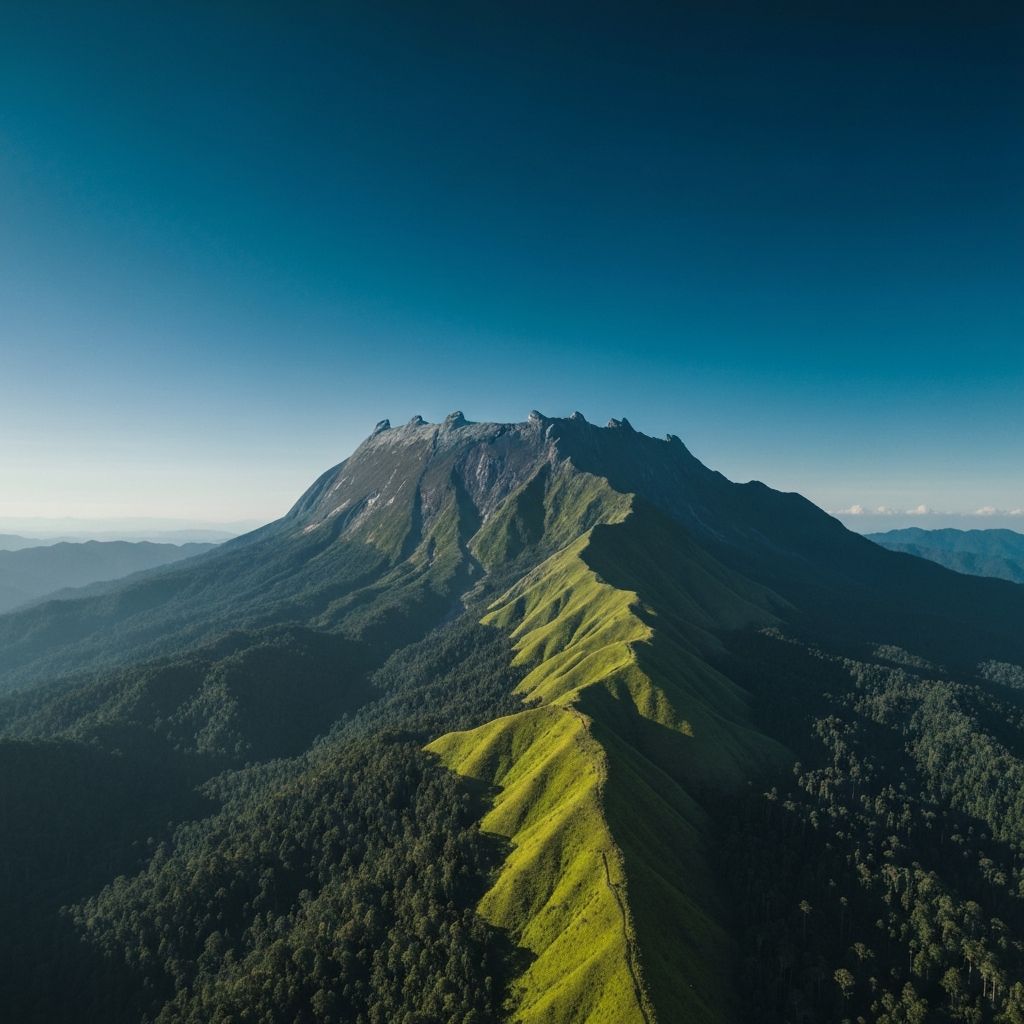
Mount Kinabalu
Southeast Asia's highest peak and a UNESCO World Heritage Site offering unforgettable climbing experiences
Location
Kinabalu National Park, Sabah, Borneo
Summit Height
4,095 meters (Low's Peak)
Climbing Duration
2 days, 1 night (typical route)
Conquer Mount Kinabalu
Mount Kinabalu stands as a majestic guardian over the island of Borneo, rising 4,095 meters above sea level to claim the title of Southeast Asia's highest peak. This magnificent mountain dominates the landscape of Sabah and holds deep cultural significance for the local Kadazan-Dusun people, who believe it to be the final resting place of departed souls. Designated as Malaysia's first UNESCO World Heritage Site in 2000, Mount Kinabalu and its surrounding national park showcase extraordinary biodiversity with over 5,000 plant species, including numerous endemic orchids and the world's largest flower, the Rafflesia. Climbing Mount Kinabalu has become a bucket-list achievement for adventurers worldwide, offering a challenging yet accessible mountain experience that rewards climbers with breathtaking sunrise views from above the clouds.
The Climbing Experience
The standard Mount Kinabalu climb follows the Timpohon Trail, which begins at 1,866 meters and ascends through multiple ecosystems over approximately 8.7 kilometers to Laban Rata rest houses at 3,272 meters. Day one involves a 5-7 hour trek through lush montane forest, where towering trees draped in moss create an enchanted atmosphere. As elevation increases, the forest transitions to cloud forest and eventually alpine meadows with unique vegetation. Climbers spend the night at Laban Rata, where basic but comfortable accommodation and hot meals provide necessary rest before the pre-dawn summit push. Day two begins around 2:00 AM, with headlamps illuminating the rocky trail as climbers ascend the final 2.7 kilometers to Low's Peak, the summit. The climb becomes progressively steeper, requiring the use of fixed ropes on some sections, but technical climbing skills are not necessary. Reaching the summit just before sunrise allows climbers to witness one of nature's most spectacular displays as the sun illuminates the surrounding peaks and clouds below.
Kinabalu National Park
Even for non-climbers, Kinabalu National Park offers exceptional experiences. The park headquarters area features well-maintained nature trails ranging from easy 30-minute walks to more challenging half-day hikes. The Mountain Garden showcases highland plants native to Mount Kinabalu, including various orchid species, rhododendrons, and carnivorous pitcher plants. The Silau-Silau Trail and Liwagu Trail provide opportunities to observe the park's rich biodiversity, including unique bird species, squirrels, and if lucky, the Bornean mountain ground squirrel. The park's botanical significance cannot be overstated – it contains more plant species than all of Europe and North America combined. Educational exhibits at the park center explain the mountain's geological formation, ecological zones, and conservation efforts. For those interested in canopy walks, the nearby Poring Hot Springs features a 158-meter long suspension walkway 41 meters above the forest floor, offering treetop perspectives and wildlife viewing opportunities.
Via Ferrata Adventure
Mount Kinabalu hosts the world's highest via ferrata (iron road), offering an exhilarating alternative descent route for adventure seekers. The via ferrata system consists of steel cables, rungs, and suspension bridges fixed to the granite rock face, allowing participants to traverse dramatic cliff faces and gorges with spectacular mountain views. Two routes are available: the Walk the Torq (2-3 hours) suitable for beginners, and the Low's Peak Circuit (4-5 hours) for experienced participants, which includes a memorable 400-meter traverse across vertical rock faces. Both routes begin after reaching the summit, adding an extra dimension to the climbing experience. Participants are securely harnessed and clipped to the fixed cables throughout the journey, with trained guides ensuring safety. The via ferrata experience provides adrenaline-pumping moments as you step onto narrow ledges hundreds of meters above the valley floor, with nothing but clouds and mountain peaks surrounding you.
Cultural Significance and Local Legends
To the indigenous Kadazan-Dusun people of Sabah, Mount Kinabalu is known as "Aki Nabalu," meaning "the revered place of the dead." According to local legend, the mountain is the final resting place of ancestral spirits, and great respect must be shown when climbing. Traditional beliefs require offerings to be made before ascending, and this practice continues with many guides performing small ceremonies at the start of climbs. The mountain's name itself has multiple origin theories – some believe it derives from "Aki Nabalu," while others suggest it comes from the Kadazan words "Kina" (Chinese) and "Balu" (widow), relating to a legend about a Chinese prince and a local woman. The Kadazan-Dusun traditionally made pilgrimages to the mountain to honor their ancestors, considering it sacred ground. Today, this cultural heritage adds depth to the climbing experience, reminding visitors that Mount Kinabalu is more than just a physical challenge – it's a place of profound spiritual significance that has shaped local culture for centuries.
Flora and Fauna
Mount Kinabalu's exceptional biodiversity stems from its dramatic elevation range and varied microclimates. The lowland forests host towering dipterocarp trees, while mid-elevation oak and rhododendron forests create dense canopies home to numerous bird species including the Kinabalu-endemic mountain blackeye. The park protects over 90 species of lowland mammals and around 22 montane species. Birdwatchers can spot over 300 bird species, including the spectacular Whitehead's trogon and Kinabalu friendly warbler found nowhere else. The mountain's orchid diversity is legendary, with over 1,000 species including rare and endemic varieties. Carnivorous pitcher plants (Nepenthes) thrive in nutrient-poor alpine areas, with several species exclusive to Mount Kinabalu. The forests also shelter rare mammals like the Bornean ferret badger and Kinabalu giant red leech. Above 3,000 meters, the vegetation transforms into unique alpine scrubland with hardy shrubs and the fascinating Leptospermum recurvum, a twisted stunted tree adapted to harsh conditions. This concentration of endemic species makes Mount Kinabalu one of the world's most important centers of botanical diversity.
Planning Your Climb
Climbing Mount Kinabalu requires advance planning as daily permits are limited to preserve the mountain ecosystem. Climbers must book through registered tour operators or directly through Sabah Parks, with packages including climbing permits, mountain guide, accommodation at Laban Rata, and meals. Physical preparation is important – regular cardio exercise and practice hikes with elevation gain will make the experience more enjoyable. The mountain can be climbed year-round, though March to September generally offers drier conditions. Essential gear includes proper hiking boots, warm layers (temperatures drop to near freezing at the summit), rain gear, headlamp, water bottles, and snacks. Most climbers rent cold-weather jackets and pants at the park. Altitude sickness can affect some climbers, so ascending slowly and staying hydrated is crucial. The descent, completed on day two after the sunrise summit experience, takes 3-4 hours back to the park gate. Total cost for the climb ranges from RM 1,500-2,500 depending on package inclusions. The experience of standing atop Southeast Asia's highest peak, watching the sunrise paint the sky while clouds swirl in valleys below, creates memories that last a lifetime, making Mount Kinabalu a must-visit destination for anyone traveling to Malaysian Borneo.