
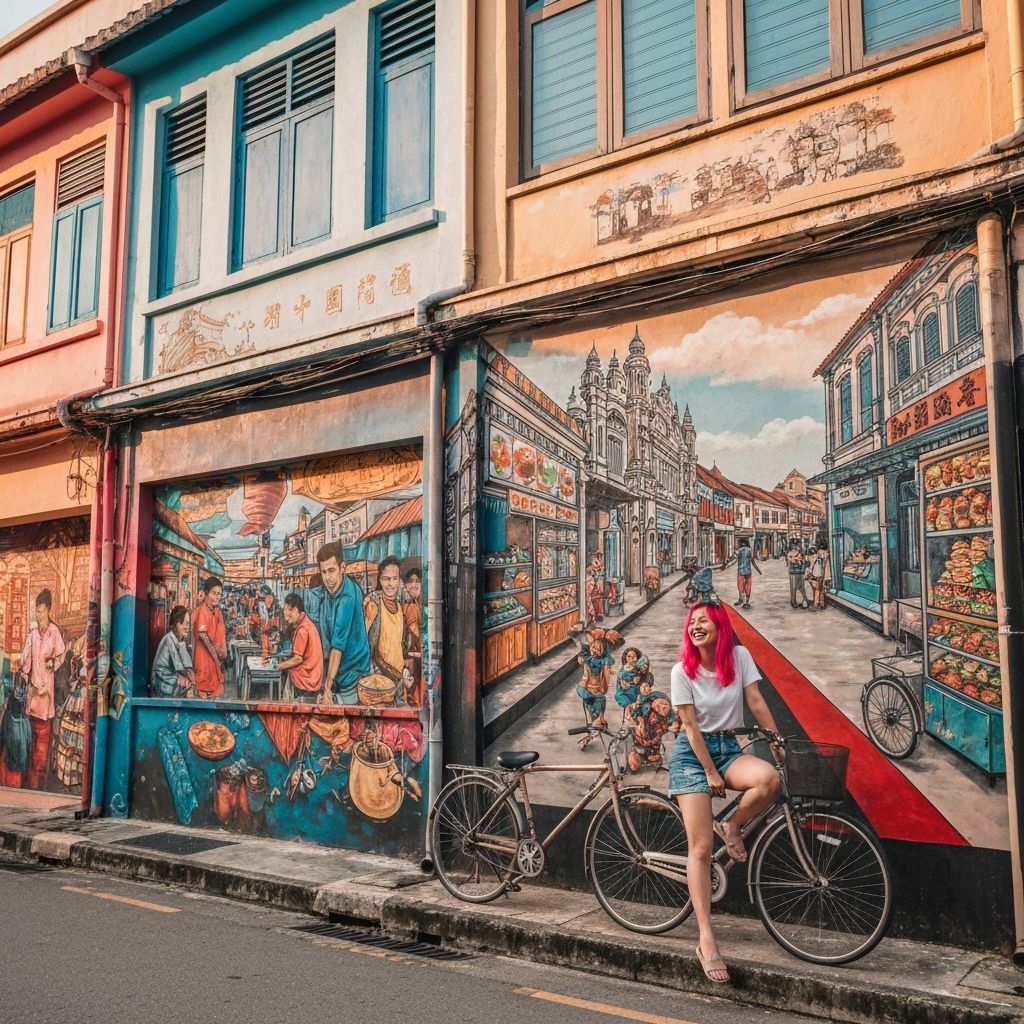
Penang
The Pearl of the Orient - A UNESCO World Heritage city famous for food, culture, and street art
Location
Northwestern Peninsular Malaysia
Famous For
Street food capital of Malaysia
Highlights
UNESCO heritage site, street art, temples
Discover Penang's Rich Heritage
Penang, affectionately known as the "Pearl of the Orient," is a vibrant Malaysian state comprising Penang Island and a section of the mainland called Seberang Perai. George Town, the capital city on the island, earned UNESCO World Heritage Site status in 2008 for its exceptional colonial and Asian architectural heritage. This multicultural haven perfectly blends Malay, Chinese, Indian, and British colonial influences, creating a unique cultural tapestry that manifests in its architecture, festivals, and most famously, its food. Penang has earned recognition as Malaysia's food capital and one of Asia's premier culinary destinations, where hawker stalls and restaurants serve authentic dishes passed down through generations. Beyond gastronomy, Penang offers art-filled streets, beautiful beaches, nature reserves, and a dynamic urban culture that attracts millions of visitors annually.
George Town UNESCO World Heritage Site
George Town's historic core showcases exceptional multicultural heritage architecture spanning 200+ years. Walking through the heritage zone reveals pre-war shophouses with ornate facades, clan houses adorned with intricate carvings, colonial administrative buildings, and religious structures representing various faiths. Armenian Street, once the heart of the trading community, now buzzes with cafes, galleries, and souvenir shops in restored heritage buildings. Clan jetties extending into the sea preserve traditional Chinese water village life, with Chew Jetty being the most accessible to visitors. The Khoo Kongsi, a 19th-century clan house, stuns visitors with elaborate architecture, detailed carvings, and colorful murals depicting Chinese legends. Religious diversity is evident in the harmonious proximity of temples, mosques, and churches—the Kuan Yin Temple, Kapitan Keling Mosque, and St. George's Church stand within walking distance along the Street of Harmony. Magnificent colonial buildings like Fort Cornwallis, the oldest British fort in Malaysia, and the Penang State Museum provide historical context to the island's past.
Street Art and Cultural Installations
Penang's street art scene gained international fame after Lithuanian artist Ernest Zacharevic created his iconic interactive murals in 2012. His "Little Children on a Bicycle" mural on Armenian Street has become Penang's most photographed artwork, featuring children on a real bicycle attached to the wall. Other famous pieces include "Boy on a Bike," "Brother and Sister on a Swing," and "Old Motorcycle," all incorporating physical objects into painted scenes. Beyond Zacharevic's works, local and international artists have added hundreds of murals throughout George Town, creating an open-air gallery. The "Marking George Town" project added sculptural steel caricatures called "wire rods" at various locations, each telling stories about Penang's cultural practices and historical trades. Art Lane, a narrow alley near Armenian Street, showcases evolving street art where new pieces regularly appear. The Hin Bus Depot art center hosts exhibitions, performances, and a rotating collection of street art on its walls. Exploring these artworks on foot or by bicycle has become an essential Penang experience, with treasure hunt maps available to help locate the famous pieces scattered throughout the heritage zone.
Penang's Legendary Food Scene
Penang's reputation as Malaysia's food capital is well-deserved, with iconic dishes that have achieved legendary status. Char kway teow (stir-fried flat rice noodles), assam laksa (spicy-sour fish noodle soup), and Hokkien mee (prawn noodle soup) represent just a fraction of the culinary offerings. Nasi kandar, a Muslim Indian dish of steamed rice served with various curries, is a Penang staple with famous establishments like Hameediyah Restaurant serving since 1907. Gurney Drive Hawker Centre and New Lane Hawker Centre showcase dozens of stalls offering diverse cuisines at affordable prices. Penang's Nyonya cuisine, a fusion of Chinese and Malay influences, features unique dishes like ayam pongteh (chicken in fermented bean sauce) and jiu hu char (shredded jicama with cuttlefish). For breakfast, try local favorites like dim sum, Penang-style koay teow th'ng (flat noodle soup), or roti canai with curry. The island's food culture extends beyond hawker centers to traditional kopitiams (coffee shops) serving Hainanese coffee and kaya toast, as well as innovative contemporary restaurants reinterpreting heritage recipes. Food tours have become extremely popular, with guides leading visitors through lesser-known neighborhoods to discover authentic flavors beyond tourist areas.
Penang Hill and Natural Attractions
Rising 821 meters above sea level, Penang Hill offers cool respite from the tropical heat and panoramic views of George Town, the mainland, and on clear days, even neighboring states. The funicular railway, operating since 1923 (modernized in 2011), transports visitors to the summit in about 5 minutes through steep terrain. The hilltop features colonial bungalows, gardens, a Hindu temple, a mosque, nature trails, and The Habitat, an eco-tourism destination showcasing Penang's rainforest ecosystem. The Habitat's Curtis Crest Tree Top Walk provides elevated walkways through the jungle canopy, culminating in a spectacular viewing platform 250 meters above sea level. For beach lovers, Batu Ferringhi on the northern coast offers the island's most developed beach area with hotels, water sports, and the famous night market. Monkey Beach, accessible by boat or hiking trail, provides a more secluded experience. The Penang National Park (Taman Negara Pulau Pinang), Malaysia's smallest national park, protects important coastal and rainforest ecosystems with trails leading to beaches, a turtle sanctuary, and a canopy walkway. The Tropical Spice Garden showcases over 500 species of tropical flora in beautifully landscaped gardens with guided tours explaining the uses of various spices and plants.
Museums and Cultural Experiences
Penang offers numerous museums and cultural centers that provide deeper understanding of its heritage. The Penang Peranakan Mansion showcases the opulent lifestyle of Straits Chinese families through antique furniture, jewelry, and ceremonial objects displayed in a restored 19th-century townhouse. The House of Yeap Chor Ee preserves another magnificent heritage mansion with original furnishings and family heirlooms. Made in Penang Interactive Museum uses augmented reality and interactive displays to tell Penang's story in an engaging way perfect for families. The Penang Museum and Art Gallery houses historical artifacts, traditional costumes, and rotating art exhibitions. Camera Museum displays hundreds of vintage cameras chronicling photography's evolution. For hands-on experiences, the Batik Painting Museum offers workshops where visitors create their own batik art pieces. Teksen Restaurant and Gallery combines fine dining with contemporary art exhibitions featuring local artists. The Asia Comic Cultural Museum celebrates Asian comic art and animation. Traditional performances of Chinese opera, Indian classical dance, and Malay cultural shows occur regularly at various venues, often free to the public. Visiting during major festivals like Chinese New Year, Thaipusam, or Hari Raya provides opportunities to witness elaborate celebrations that showcase Penang's multicultural harmony.
Practical Information for Visitors
Penang International Airport connects the island to major Asian cities and domestic destinations. The 24-kilometer Penang Bridge and the newer Second Penang Bridge link the island to the mainland, with bus services and taxis providing transport. Within George Town, the free CAT (Central Area Transit) bus service covers major tourist areas, though exploring on foot remains the best way to discover hidden gems. Rapid Penang buses serve the entire island at low fares. Bicycle and scooter rentals are popular for independent exploration. Grab and local taxis are widely available. Accommodation ranges from budget hostels in heritage shophouses to luxury beach resorts and boutique hotels. Mid-range hotels offer excellent value. The best time to visit is December to February when weather is cooler and drier, though Penang is enjoyable year-round. Avoid major school holiday periods if you prefer fewer crowds. Most attractions in George Town are within walking distance of each other, making 2-3 days sufficient to cover main sights, though food enthusiasts could spend weeks exploring the culinary landscape. The laid-back atmosphere, friendly locals, fascinating history, artistic creativity, and unparalleled food scene make Penang an essential destination that appeals to travelers seeking authentic cultural experiences rather than manufactured tourist attractions.